

The Short Answer
PRP works for some patients, for some diagnoses, when it is part of a real plan. That is not a hedge. It is the most honest answer I can give to one of the most searched (and most oversold) treatments in my field.
In my practice, PRP is never the starting point. Diagnosis is. Hair and skin are downstream of what is happening inside the body: hormones, iron stores, thyroid function, inflammation, and metabolic health. If those drivers are off, PRP is working uphill. When they are addressed, PRP becomes one of my favorite regenerative tools.
Here is where the evidence stands: what is proven, what is promising, and what is still premature.
What Is PRP and How Does It Work?
PRP, or platelet-rich plasma, is made from a small sample of your own blood. We spin it in a centrifuge to separate and concentrate the platelets, then deliver that concentrate to the area we are treating.
Platelets are best known for clotting, but they also release growth factors and signaling proteins that direct healing, blood vessel formation, and tissue remodeling. The goal of PRP is to put a higher concentration of those signals exactly where we want repair to happen.
For hair, PRP is injected into the scalp to support follicles that are still alive but shrinking. For skin, it is injected or applied during microneedling to support collagen remodeling and repair.
This is what makes PRP regenerative: it does not add volume like filler or relax muscle like a neuromodulator. It sends a repair signal to your own tissue. That is also why results are gradual, and why the health of that tissue (and the body supplying it) matters so much.
One transparency note: the devices used to prepare PRP are FDA-cleared, but using PRP for hair and skin is considered off-label. That is common in dermatology, and it is one more reason the person recommending it should be the person diagnosing you.
Does PRP Work for Hair Loss?
First, what kind of hair loss do you have? Patients often tell me they have “hair loss” or “alopecia.” That tells me very little. Alopecia simply means hair loss, and there are many different types, each with a different cause and a different treatment. Is it telogen effluvium? Androgenetic alopecia? Frontal fibrosing alopecia, a form of lichen planopilaris? Central centrifugal cicatricial alopecia? Alopecia areata?
These are not interchangeable. Some are driven by hormones and genetics, some by a stressor or deficiency, and some by inflammation that permanently scars the follicle if it is not controlled. That is why I examine the scalp, use trichoscopy, order labs, and biopsy when needed. You need a solid diagnosis before any treatment, PRP included.
Verdict: Proven, for the right diagnosis. The strongest evidence for PRP is in androgenetic alopecia, which is male- and female-pattern hair loss. Multiple systematic reviews and meta-analyses of randomized trials show improvement in hair density, hair shaft thickness, and shedding. The catch is that studies use different preparation methods, schedules, and outcome measures, so “PRP” in one study is not always the same treatment as “PRP” in another.
Who responds best. In my experience, the best responders have early to moderate pattern thinning, where miniaturized hairs are still present and the follicle is still working. Many of the women I see are in perimenopause with diffuse thinning at the part. They respond best when we have also addressed hormones, iron, thyroid, and nutrition, not when PRP is asked to do all the work.
What meaningful improvement looks like. Shedding usually slows first, often within three to six months. Density and thickness follow at six to twelve months. I judge that with HairMetrix imaging and standardized photos, not the mirror, because day-to-day perception is unreliable.
PRP alone or in combination? Almost always in combination. Depending on the patient, that may include topical treatments, low dose oral minoxidil, hormone optimization, nutrient repletion, and red light therapy. PRP is a strong layer in a hair longevity plan. It is rarely the whole plan.
Where PRP is overpromised. PRP will not regrow hair on a smooth, shiny scalp where follicles are gone. It does not fix shedding driven by iron deficiency, thyroid disease, illness, or rapid weight loss; that requires treating the cause. And it is not a substitute for diagnosing scarring forms of hair loss, which need a different workup entirely.
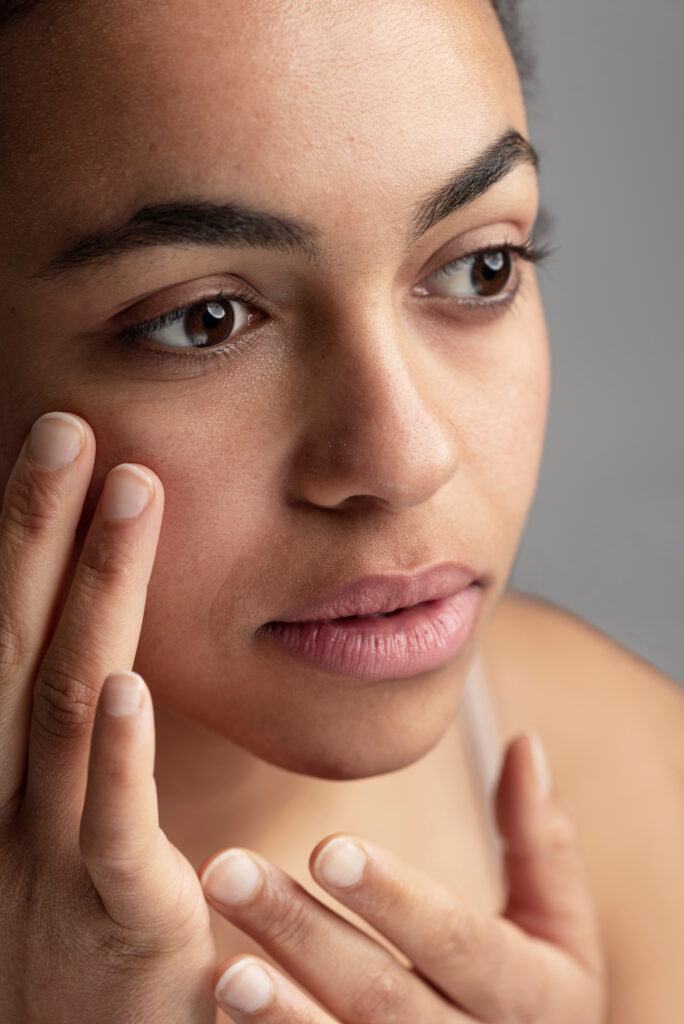
Does PRP Work for Skin?
Verdict: Proven as a booster, Promising for skin quality, Premature for most anti-aging claims.
Proven as an add-on: acne scars. Meta-analyses show that adding PRP to microneedling improves atrophic acne scars more than microneedling alone. The overall study quality is modest, but this is the most consistent skin signal we have.
Promising: overall skin quality. Smaller studies support improvements in texture, tone, fine lines, and crepey under-eye skin, plus faster recovery after microneedling and laser. I see these benefits in practice, but they are subtle and cumulative, not dramatic.
Premature: everything else you see on social media. The evidence for melasma, “reversing aging,” lifting, or replacing filler is limited or absent. PRP does not restore lost volume and it does not tighten loose skin on its own.
Stand-alone or combination? For skin, PRP earns its place in combination. I use it with microneedling, after laser to support healing, and alongside collagen-stimulating treatments such as Sculptra or hyperdilute Radiesse as part of a regenerative plan. On its own, results are real but modest.
What is overstated. The idea that one “vampire facial” will transform your skin. Collagen remodeling takes months and a series of treatments, and it depends on the quality of the tissue we start with.
How Many PRP Treatments Are Needed?
PRP is a series, not a single appointment. My typical starting points:
| Concern | Initial series | Maintenance | When to judge results |
|---|---|---|---|
| Pattern hair loss | 3 to 4 treatments, about 4 weeks apart | Every 4 to 6 months | 4 to 6 months, with HairMetrix |
| Skin quality or acne scars | 3 treatments, 4 to 6 weeks apart | 1 to 2 times per year | 3 to 6 months, with VISIA imaging |
These are starting points, not rules. I adjust frequency based on the diagnosis, how the patient responds on imaging, and what else is in their plan. If there is no measurable response after the initial series, we change course rather than keep repeating the same treatment.
Why Do PRP Results Vary?
PRP is not one standardized product, so outcomes differ between patients, practices, and studies. Researchers have not even agreed on the best way to spin the blood.
The patient matters most. The diagnosis and its stage come first. After that, the biggest drivers I see are hormonal status (especially the estrogen decline of perimenopause), iron stores, thyroid function, vitamin D, insulin resistance, chronic inflammation, smoking, and certain medications. A follicle sitting in a depleted, inflamed environment will not respond the way a well-supported one does. This is the inside-out principle behind everything we do at RENEW.
Preparation matters. Platelet concentration, the spin method, the volume delivered, and injection depth and technique all affect what actually reaches the tissue.
Your PRP is only as good as the blood it comes from. PRP is made from you, so its quality reflects your health on the day we draw it. How is your sleep? How is your cortisol? Did you drink alcohol this week? Are you hydrated? All of that affects the quality of your PRP, and ultimately your results. This is another reason optimizing internal health comes first.
Measurement matters. Every patient gets baseline imaging before we start: HairMetrix for hair and VISIA for skin, plus standardized photos. We repeat the same measurements to decide whether to continue, adjust, or stop.
What patients overlook when comparing practices. “PRP” at one office is not the same treatment as “PRP” at another. A lower price can mean a lower quality product, no diagnosis, and no way to know whether it worked. Compare the plan, not the package.
Who Is a Good Candidate for PRP, and What Can’t PRP Do?
Strong candidates have a clear diagnosis that PRP has evidence for, tissue that can still respond (living follicles, skin that can remodel), realistic goals, and willingness to complete a series, combine treatments, and optimize internal health.
Poor candidates include patients with advanced hair loss where follicles are gone, uncontrolled scarring alopecia, untreated nutritional or thyroid problems, platelet disorders, active infection, or active cancer treatment. Blood thinners and pregnancy. History of malignancy. Anyone expecting a dramatic change after one session.
When I treat the underlying issue first. If labs show low ferritin, thyroid dysfunction, or vitamin D deficiency, or if shedding follows a recent trigger such as childbirth, illness, a hormonal transition, crash dieting, or rapid weight loss on a GLP-1 medication, we correct that before investing in PRP. Otherwise we are paying for a treatment and blaming it when the real problem was never addressed.
Realistic outcomes. For hair: less shedding, then modest gains in density and thickness, maintained over time. For skin: better texture, tone, and resilience that builds gradually. Not a new face. Not a full head of hair.
When another treatment is the better choice. Volume loss calls for collagen biostimulators. Laxity calls for biostimulators or energy-based devices. Deep scars often need subcision or laser, with PRP as a booster. Pigment such as melasma needs its own strategy. Recommending the right tool, even when it is not PRP, is the job.
What Should You Ask Before Having PRP?
If you only ask three questions, ask these:
- What is my diagnosis? If no one examined your scalp or skin, checked labs, or named the condition, you are buying a procedure, not a treatment plan.
- How will we measure whether it is working? Ask for baseline imaging and a defined time point for reassessment.
- What happens if it doesn’t work? A good plan has an exit ramp, not an open-ended package.
Other questions worth asking:
- Why is PRP appropriate for me, and what does the evidence show for my condition?
- What results are realistic, and how long will they take?
- How many treatments are recommended, and will I need maintenance?
- How is the PRP prepared, and who performs the treatment?
- What should I do alongside PRP, or instead of it?
When comparing providers, pay attention to who diagnoses you, whether they measure results, and whether they are willing to tell you PRP is not the right fit.
The Bottom Line
PRP is a legitimate regenerative tool with real evidence for pattern hair loss and as a booster for acne scars and skin quality. It is not a cure-all, and it works best when the body behind the hair and skin is optimized first.
| Use | Evidence | My take |
|---|---|---|
| Pattern hair loss (men and women) | Proven | Strong option for early to moderate thinning, best in combination |
| Acne scars, with microneedling | Proven as an add-on | Improves results over microneedling alone |
| Skin texture, tone, under-eye quality | Promising | Real but subtle; builds over a series |
| Recovery after laser or microneedling | Promising | A useful support layer |
| Melasma, lifting, replacing filler | Premature | Not what PRP does |
At RENEW, regenerative treatment starts with the RENEW Longevity Assessment: comprehensive labs, body composition, VISIA skin imaging, and HairMetrix hair analysis. If PRP belongs in your plan, the data will show it. If it doesn’t, I will tell you, and we will find what does.
Ready to stop guessing? Schedule your RENEW Longevity Assessment.
This article is for education only and is not a substitute for a medical evaluation. Individual results vary.
References
- Lopes-Silva R, et al. Platelet-Rich Plasma Effectiveness in Treating Androgenetic Alopecia: A Comprehensive Evaluation. Cureus. 2025;17(1):e77371.
- Ghanem L, et al. Comparison of single-spin to double-spin PRP centrifugation methods in androgenic alopecia: a systematic review and meta-analysis of RCTs. Front Med. 2025;12:1631087.
- Kang C, Lu D. Combined Effect of Microneedling and Platelet-Rich Plasma for the Treatment of Acne Scars: A Meta-Analysis. Front Med. 2022;8:788754.
- Cruciani M, et al. Platelet-rich plasma use for treatment of acne scars: an overview of systematic reviews. Blood Transfus.
- Vesala AM, Nacopoulos C. Microneedling and injectable-Platelet Rich Fibrin for Skin Rejuvenation and Regeneration. Med Res Arch. 2025;13(5).